



loading count
loading pagination
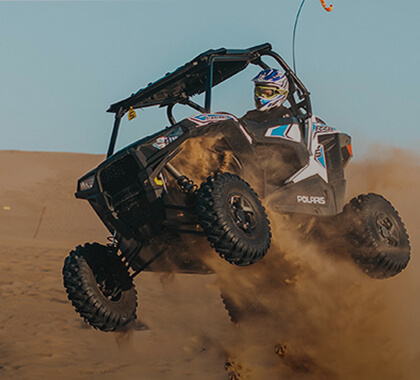
Dust and dirt kick up off the dry track before the rocks even hit. A torn-off side panel from a tight trail squeeze, a cracked front cap from a dune landing, and suddenly your RZR looks ten years older than it is. That's the moment most riders find us. Our shelves run 3/16" HDPE fender flares built to shrug off rock strikes, 1/8" powder-coated aluminum inner fender guards that stop branches before they reach the firewall, and vented aluminum hoods from Maier USA that clean up a front end while pulling more air into the engine bay. Whether it's a summer dune trip or a muddy fall trail ride that did the damage, the fix is bolt-on, not a bodyshop visit.
We build fitment around five model families: the XP 1000 (2014+, the volume leader; most of our fender flares, inner fender guards, and side panels are cut specifically for its wheel wells and door gap), the Pro R (2022+, wider stance means its inner fender guards and MOLLE-style aluminum panels are Pro R-specific, not XP 1000 crossover parts), the Pro S and Pro XP (share a cab width but split on cage profile, so front cap and hood fitment differs between them), and the Trail / Trail S (narrower body, its own fender flare and side panel cuts). We carry SuperATV and Assault Industries panels across most of that lineup, plus Maier USA hoods for the models they fit. We're the fitment experts; text us at (920) 644-5280, call (920) 543-5376, or hit the live chat on any page, and we'll match the panel to your exact model before you spend a dollar. We only sell brands we'd bolt onto our own machines. iF it's on this page, someone on our team would run it.
Riders modifying body panels usually land in one of five buckets: fender flares for mud and rock protection, inner fender guards for the branches and debris a flare can't stop, side/rocker panels to finish the look after a door install, hoods and front caps for a cosmetic refresh or an airflow bump, and rivets and fasteners for the cheap fixes that don't need a full panel swap. The table below breaks down what each type actually gets you.
|
Type |
Material |
Best for |
What you give up |
|
Fender Flares |
3/16" HDPE (high-density polyethylene) |
Keeping mud, rocks, and trail spray out of the cab without touching the frame |
Adds width to the machine's footprint; tight trailer fits may need the low-profile version instead |
|
Inner Fender Guards |
1/8" aluminum, powder-coated |
Stopping branches and rocks that get past the flare and threaten the firewall |
Frame-mounted — expect some drilling; not a substitute for the outer flare, a second layer |
|
Side & Rocker Panels |
HDPE plastic or bent aluminum |
Finishing the look and covering the gap left after a door install |
Plastic flexes on impact and can crack in a hard hit; aluminum holds its shape but costs more |
|
Hoods & Front Caps |
ABS composite or vented powder-coated aluminum |
A cosmetic front-end refresh, or added airflow with a vented design |
Vented styles let more dust into the engine bay on dry, dusty trail days |
|
Rivets, Clips & Fasteners |
Nylon push-rivets or aluminum hardware |
Cheap fixes for lost or broken factory retention hardware |
Doesn't repair a cracked panel — only holds the parts you've already got |
Quality in this category comes down to gauge and finish, not just brand name. SuperATV's fender flares run 3/16" HDPE — thick enough to take a direct rock strike without cracking, where cheaper flares in thinner plastic chip and split after a season. Assault Industries' inner fender guards use 1/8" aluminum plating with a powder-coat finish, which is what actually stops corrosion once the coating gets scratched on the trail — a bare-aluminum guard rusts at every rock chip. Hardware matters just as much: OEM-style push rivets crack after a couple of removals, while the pliers-and-rivet combo tools sold with replacement rivet sets let you pull and reset hardware without wrecking the panel underneath.
Prices in this category run wide depending on whether you're fixing a broken clip or refreshing the whole exterior. On the budget end, a Polaris RZR Plastic Body Rivet Pliers Tool & Rivets by Quad Logic runs $21.95. It’s the ultimate fix for lost or cracked factory fasteners, no panel replacement needed. Most riders land in the sweet spot with something like Kemimoto's Polaris RZR Extended Fender Flares at $123.99. It’s got real HDPE protection, an easy bolt-on, and enough coverage for regular trail and mud riding. On the premium end, pieces like the DRT Motorsports Aluminum Wind Diffuser at $210 deliver aerospace-grade 6061 aluminum and a powder-coated finish to provide the durability serious builds want. The most common warranty in this category runs 3–6 months depending on manufacturer, but Everything Polaris RZR does offer extended 1- and 2-year warranties on all products if that's something you're interested in. You can add the extended warranty right at checkout. Every order also comes with a risk-free 90-day return window and our price match guarantee. If you find it cheaper, we'll match it.
Aftermarket doesn't mean lesser here; it means more choice. SuperATV builds its RZR fender flares in 3/16" HDPE, thicker than the stock plastic Polaris ships from the factory, and backs it with a defect warranty on top of that thickness. Stepping out of the OEM parts counter means you're no longer stuck with one panel, in one material, at one price. You're choosing between HDPE and aluminum, between a $22 rivet fix and a $210 aluminum diffuser, based on what your riding actually calls for.
Do RZR body panels differ between the XP 1000, Pro R, Pro S, Pro XP, and Trail models?
Yes. Even panels that look similar are usually cut for a specific cab width and wheel well. An XP 1000 fender flare will not bolt onto a Pro R, and Pro S/Pro XP panels split on cage profile despite sharing a similar cab width. Always confirm your exact model and year before ordering; our team can verify fitment before you check out.
Will I need to drill into my RZR to install these panels?
It depends on the part.It depends on the specific part and model. Some fender flares and panels bolt to existing holes, others (including some fender flare kits) require drilling. Check the individual product page, which will state this explicitly, before you buy. The product page for each item will note this. Check details before you buy if you'd rather avoid drilling.
Are these panels compatible with the doors and cages I already have installed?
Most side and rocker panels are designed to work alongside factory OEM doors and cages, and side panels specifically fill the gap that's left once doors go on. Aftermarket cages or non-factory door kits can change clearance, so it's worth confirming fitment with our team if your machine has other aftermarket body work already installed.
How long do HDPE and aluminum body panels hold up compared to factory plastic?
HDPE is more impact-resistant than the thinner plastic Polaris uses at the factory, and it won't fade or become brittle in the same way over multiple seasons. Powder-coated aluminum holds up even longer against UV and general wear, though it costs more upfront. Both outlast a vinyl wrap or spray paint job, which tend to peel or fade within a season or two of regular riding.
Are aftermarket Polaris RZR body panels as good as OEM panels?
OEM is one well-made option in one material at one price. The aftermarket gives you that same quality level from multiple manufacturers, in materials that factory doesn’t offer: 3/16" HDPE, 1/8" powder-coated aluminum. Plus, it does so at prices that are typically lower, and designed for driveway installation. SuperATV's 3/16" HDPE fender flares, for example, run thicker than Polaris's factory plastic while still bolting on in about the same amount of time.
Written and reviewed by the Everything Polaris RZR fitment and marketing team — riders and product specialists who work with these machines daily. Spot an error, or have a suggestion that would make this guide more helpful? Email us at marketing@gearup2go.com — we read every note.
Last updated: July 2026