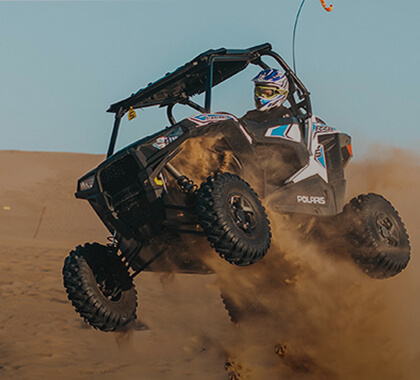




loading count
loading pagination
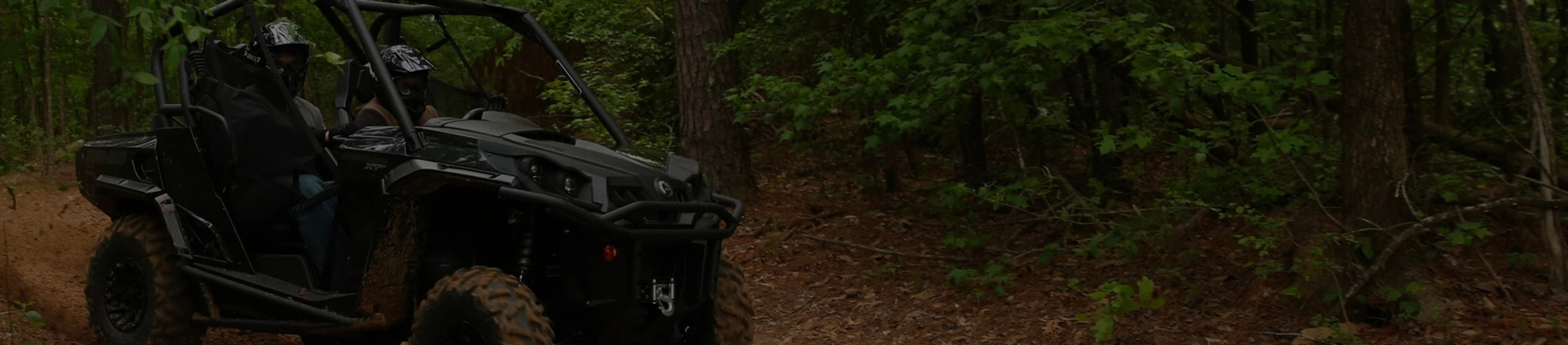
You are three miles up a two-track when the front end drops into a rutted creek crossing and the rear tires spin free. Nobody is coming. A 4,500 lb winch bolted to the front of your RZR turns that evening from a long walk into a 10-minute job, and it is the same tool that drags a downed oak off the trail behind you. The winches on this page run from a 3,000 lb KFI with a 1.5 hp motor up to a 5,000 lb KFI Assault with a two-year warranty, in synthetic rope and steel cable, from Rough Country, KFI, SuperATV and QuadBoss. The ownership and management team here has 100+ combined years in the UTV industry, which is long enough to know which winches come back and which ones don't.
Here is the part most buyers miss: a winch is not a bolt-on until you have the mount that goes with it. Nearly every winch sold for a RZR ships fairlead-mount only, and the model-specific mounting plate or winch-ready bumper is a separate purchase. Bolt patterns are not universal either. The Rough Country 4,500 lb runs a 4.87 x 3 pattern, KFI and QuadBoss use a 3.00 x 4.875 four-hole pattern, and the SuperATV Black Ops uses 3.0 x 6.6, so the plate has to match the winch and the machine. XP 1000, Pro XP and Pro R front ends all take different plates, and four-seat RZR 4 machines need longer wiring runs to reach the dash. Text us at (920) 644-5280, call (920) 543-5376, or use the live chat on any page and we will match the winch, the mount and the year of your machine before you make any key purchasing decisions.
|
Winch type |
Motor and line |
Best for |
What you give up |
|
3,000 lb electric |
1.5 hp, 171:1, 3/16 in. x 45.9 ft cable |
Trail RZRs, 570 and 900 machines, light self-recovery |
Thin margin once mud and water add weight |
|
3,500 lb electric |
3.5 hp, 2-stage planetary, 39 ft x 7/32 in. cable |
Budget builds, ranch and cabin work |
Steel cable needs gloves and careful spooling |
|
4,500 lb electric |
1.3–1.4 hp, 166:1, 50 ft synthetic |
The default for two-seat RZRs, mud and rock |
Synthetic needs rinsing and UV protection |
|
5,000 lb electric |
1.22 hp, 180:1, 15/64 in. x 38 ft synthetic |
RZR 4, heavy builds, repeated pulls |
Shorter line, higher current draw |
|
Gas portable capstan |
Fuel-powered, 164 ft x 3/8 in. polyester rope |
Unlimited-length pulls away from the machine |
1,550 lb rated on a straight pull, and it is not bumper-mounted |
Motors rarely die first. Water does. Look at how the electronics are sealed: the SuperATV Black Ops lists waterproof seals and a waterproof solenoid, while cheaper units say water-resistant, and that word gap shows up two seasons later as a corroded contactor. Check the brake next. KFI runs dynamic and mechanical braking on both the A3000 and the Assault, which holds a load on a slope instead of letting it creep. Then check the gear train, where all-metal planetary drive is what you want and plastic anywhere in that stack is not. Match the fairlead to the line as well. Steel cable wants a roller fairlead, synthetic wants an aluminum hawse or a synthetic-safe roller like the POM unit KFI ships, and running synthetic across the wrong roller will chew it. One more from our own returns bench: the most common mistake we see is a customer buying a winch and no mount, then discovering the fairlead bracket in the box bolts to nothing on their machine.
The entry point is the Rough Country 4,500 lb with synthetic rope at $199.99, which is honestly a lot of winch for the money: 1.4 hp, 166:1 reduction, 50 feet of quarter-inch synthetic and a hawse fairlead in the box. Most RZR owners land between $272 and $374.95, where you get sealed electronics, a wireless remote and enough capacity for a loaded machine. That middle band is the sweet spot and it is where we ship the most units. The premium electric is the KFI Assault at $479, earning it with a two-year manufacturer warranty, dual controls and 5,000 lb of rated pull. Worth knowing before you sort by price: the most expensive item in this category is the Kimpex gas-powered portable capstan winch at $1,776.50 plus a $99.99 shipping surcharge, and it is rated at 1,550 lb on a straight pull, or close to double that through the stainless snatch block the kit includes. It costs more because it is a different tool, one that runs 164 feet of rope on gasoline with the machine parked, not because it out-muscles a $199.99 electric. Financing through Affirm is available at checkout on kits at that level. The most common manufacturer warranty here is between 3–6 months, but Everything Polaris RZR does offer extended 1- and 2-year warranties on all products if that is something you are interested in, and you can add the extended warranty right at checkout. Many of these listings also carry downloadable install guides, with more added all the time. You can see what RZR owners say about us before you order.
Budget for the mount at the same time. Our Polaris RZR winch accessories section carries the model-specific plates, fairleads, snatch blocks and line, and several of our RZR bumpers and brush guards are built winch-ready so one part does both jobs. If you plan to push snow, size up rather than down, because a RZR snow plow lifts on the winch line and asks it to work all winter. Our older Top 3 Winches for the Polaris RZR guide goes deeper on line choice.
Does a RZR winch come with the mount?
Almost never. Nearly every winch here ships with a fairlead bracket only, and you add a model-specific mounting plate or a winch-ready bumper separately. That plate is cut for your exact model and year, so a Pro XP plate will not fit a Trail 900. Send us your model and year and we will confirm the pair before you order.
What capacity does my RZR need?
Start with the machine's weight and add what the trail adds. A two-seat RZR is well served by 4,500 lb, which is why that band outsells everything else here. Step up to 5,000 lb for a RZR 4, a machine on 30-inch-plus tires, or anywhere mud and standing water pile weight onto the chassis. A 3,000 lb unit is enough for a light 570 or 900 that sees dry trail.
Synthetic rope or steel cable?
Synthetic is lighter, easier on bare hands and does not store energy the way steel does, so it drops instead of snapping back if it lets go. It also needs rinsing after mud and it degrades in sunlight, so a winch cover pays for itself. Steel cable costs less and shrugs off abrasion, but it kinks, it frays into your palms and it demands a roller fairlead. Most RZR owners choose synthetic.
Are aftermarket winches as good as the Polaris factory option?
The factory unit is one well-made choice at one price. The aftermarket gives you that same build quality from several makers, usually for less, in capacities and line types Polaris does not offer. The SuperATV Black Ops is a fair example: a 1.3 hp permanent magnet motor, 166:1 reduction, waterproof solenoid and 50 feet of synthetic, designed so an owner can install it in a driveway with hand tools.
Will a winch drain my battery?
A winch pulls hard current for short bursts, which is why KFI specifies a 12 amp-hour battery as the minimum for the A3000. A healthy battery and a running engine handle normal recovery pulls. Repeated long pulls with the engine off is what leaves you stranded, so keep it idling while you work.
Written and reviewed by the Everything Polaris RZR fitment and marketing team — riders and product specialists who work with these machines daily. Spot an error, or have a suggestion that would make this guide more helpful? Email us at marketing@gearup2go.com and we read every note.
Last updated: August 2026